Polity Territory List
A viewset for viewing and editing Polity Territories.
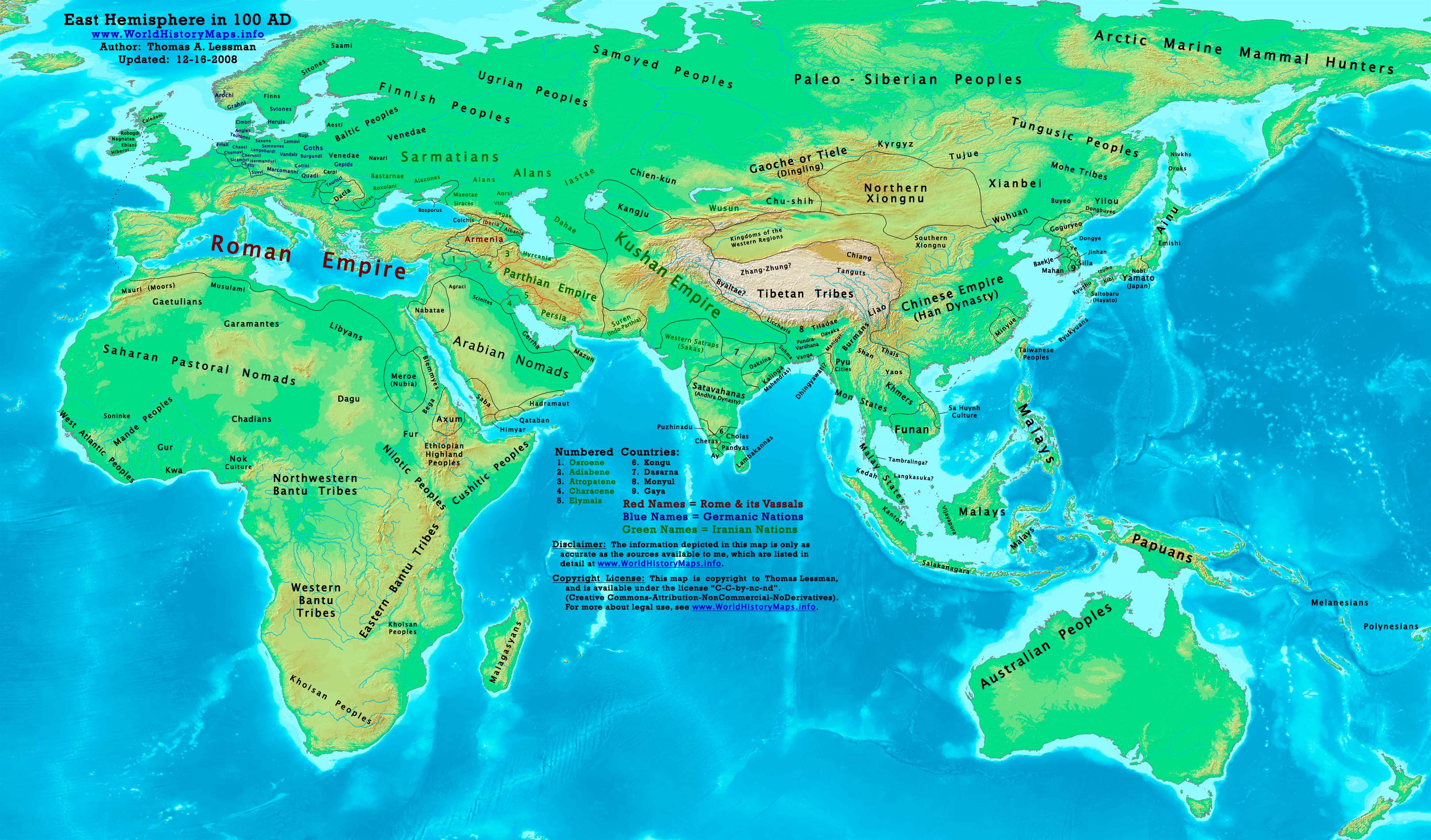
GET /api/sc/polity-territories/?format=api&page=11
{ "count": 606, "next": "https://seshat-db.com/api/sc/polity-territories/?format=api&page=12", "previous": "https://seshat-db.com/api/sc/polity-territories/?format=api&page=10", "results": [ { "id": 887, "polity": { "id": 246, "name": "cn_chu_dyn_spring_autumn", "long_name": "Chu Kingdom - Spring and Autumn Period", "start_year": -740, "end_year": -489 }, "year_from": -700, "year_to": -700, "tag": "TRS", "is_disputed": false, "is_uncertain": false, "name": "Polity_territory", "polity_territory_from": 50000, "polity_territory_to": 70000, "comment": "EMPTY_COMMENT", "description": null }, { "id": 888, "polity": { "id": 246, "name": "cn_chu_dyn_spring_autumn", "long_name": "Chu Kingdom - Spring and Autumn Period", "start_year": -740, "end_year": -489 }, "year_from": -600, "year_to": -600, "tag": "TRS", "is_disputed": false, "is_uncertain": false, "name": "Polity_territory", "polity_territory_from": 370000, "polity_territory_to": 370000, "comment": "EMPTY_COMMENT", "description": null }, { "id": 889, "polity": { "id": 246, "name": "cn_chu_dyn_spring_autumn", "long_name": "Chu Kingdom - Spring and Autumn Period", "start_year": -740, "end_year": -489 }, "year_from": -500, "year_to": -500, "tag": "TRS", "is_disputed": false, "is_uncertain": false, "name": "Polity_territory", "polity_territory_from": 200000, "polity_territory_to": 300000, "comment": "km^2<br>700 BCE<br> \"sphere of influence around the Bend of the Han\" + Nanyang Basin (46291 km2) + Fangcheng Wai.<br>600 BCE<br> \"sphere of influence around the Bend of the Han\" + Nanyang Basin + Fangcheng Wai + Huai River.<br>500 BCE<br> \"sphere of influence around the Bend of the Han\" + Nanyang Basin + Fangcheng Wai + Huai River. - territories lost to Wu.<br>706-690 BCE<br> Annexed Hanxi states \"Quan and, perhaps, Ran\". <a class=\"fw-bold\" href=\"https://www.zotero.org/groups/1051264/seshat_databank/items/NTSIVZX6\">[Major_Cook 1999, p. 15]</a> \"The first objective was to create a sphere of influence around the Bend of the Han, a task that was completed by the early seventh century. Chu then immediately set out to gain control of the Nanyang Basin and the approaches to it (Fangcheng Wai).\" <a class=\"fw-bold\" href=\"https://www.zotero.org/groups/1051264/seshat_databank/items/NTSIVZX6\">[Major_Cook 1999, p. 20]</a> 688-656 BCE<br> \"pushed into the Nanyang Basin and carved out a zone beyond it in Fangcheng Wai.\" <a class=\"fw-bold\" href=\"https://www.zotero.org/groups/1051264/seshat_databank/items/NTSIVZX6\">[Major_Cook 1999, p. 15]</a> 655-585 BCE<br> Expansion into Huai region. Took Xuan, Huang, and Ying (Yingshi). Long war with Jin after the defeat at battle of Chengpu (632 BCE). Took Jiang 623 BCE, Jyang ? and then Fan and Lyao 622 BCE. Xaio taken 597 BCE, Zhoulai taken before 585 BCE. <a class=\"fw-bold\" href=\"https://www.zotero.org/groups/1051264/seshat_databank/items/NTSIVZX6\">[Major_Cook 1999, p. 16]</a> 584-508 BCE<br> Wu gains at Chu expense in Middle Huai. <a class=\"fw-bold\" href=\"https://www.zotero.org/groups/1051264/seshat_databank/items/NTSIVZX6\">[Major_Cook 1999, p. 16]</a> Major defeat to Jin and allies at Yanling (575 BCE). <a class=\"fw-bold\" href=\"https://www.zotero.org/groups/1051264/seshat_databank/items/NTSIVZX6\">[Major_Cook 1999, p. 16]</a> Gained Shu 574 BCE, lost Xyu and Zhoulai in 519 BCE to Wu. <a class=\"fw-bold\" href=\"https://www.zotero.org/groups/1051264/seshat_databank/items/NTSIVZX6\">[Major_Cook 1999, pp. 16-17]</a> 507-400 BCE<br> Renewed expansion. Re-occupation of Upper and Middle Huai. <a class=\"fw-bold\" href=\"https://www.zotero.org/groups/1051264/seshat_databank/items/NTSIVZX6\">[Major_Cook 1999, p. 17]</a> 400-223 BCE<br> \"After the accommodation with Jin in 546, Chu had for the most part been able to keep the states in and bordering the Fangcheng Wai area under its control. With Han and Wei now centered below the Yellow River (Huanghe), this was no longer the case.\" <a class=\"fw-bold\" href=\"https://www.zotero.org/groups/1051264/seshat_databank/items/NTSIVZX6\">[Major_Cook 1999, p. 17]</a> With the loss of Fangcheng Wai, Chu expansion focused on the east before the gradual conquest by the Qin. <a class=\"fw-bold\" href=\"https://www.zotero.org/groups/1051264/seshat_databank/items/NTSIVZX6\">[Major_Cook 1999, p. 20]</a> size of State of Chu by 5th c. bce<br>Hsu: “An expansion of territory is a characteristic of all major states, and the four most powerful states of the Spring and Autumn period — Qi, Jin, Chu, and Qin - all expanded dramatically. Qi Huan Gong annexed 35 neighboring states to become the first ba. Jin Xian Gong took 17 states and subjugated 38, paving the way for Jin to lead the Zhou world for generations. Qin Mu Gong fUS-^ (659—621 B.C.) combined 12 other states to extend its territory in the west. During the reign of King Zhuang of Chu (613-591 B.C.), Chu annexed no fewer than 26 states, many of which were former important Zhou states, and thus became the main threat to the Zhou \u2028world.' Of 148 states that appear in the chronicles of the Spring and Autumn period,\" the number extinguished by these four major powers adds up to 1*” <a class=\"fw-bold\" href=\"https://www.zotero.org/groups/1051264/seshat_databank/items/PQ6X7MWZ\">[Hsu_Loewe_Shaughnessy 1999, p. 567]</a>", "description": null }, { "id": 890, "polity": { "id": 249, "name": "cn_chu_k_warring_states", "long_name": "Chu Kingdom - Warring States Period", "start_year": -488, "end_year": -223 }, "year_from": null, "year_to": null, "tag": "TRS", "is_disputed": false, "is_uncertain": false, "name": "Polity_territory", "polity_territory_from": 460000, "polity_territory_to": 460000, "comment": null, "description": null }, { "id": 891, "polity": { "id": 299, "name": "ru_crimean_khanate", "long_name": "Crimean Khanate", "start_year": 1440, "end_year": 1783 }, "year_from": null, "year_to": null, "tag": "UND", "is_disputed": false, "is_uncertain": false, "name": "Polity_territory", "polity_territory_from": null, "polity_territory_to": null, "comment": null, "description": "in squared kilometers<br>https://en.wikipedia.org/wiki/Crimean_Khanate#/media/File:Crimean_Khanate_1600.gif<br>\"By 1475 the Turks had seized control of Kaffa, imposed tribute on the Genoese merchants, and annexed most of the Crimean coast and foothills between Inkerman and Kaffa - about a tenth of the Crimean peninsula.\"§REF§(Davies 2007, 7) Brian L Davies. 2007. Warfare, State And Society On The Black Sea Steppe. Routledge. Abingdon.§REF§<br>\"Haji Girei established his capital at Bakhchisarai on the Crimean peninsula but continued to lay claim to the title of 'Great Khan of the Great Horde, of the Crimean Throne, and of the Kipchak Steppe,' thereby asserting his sovereignty over the Pontic steppe and the forest-steppe from Moldavia to the Volga and as far north as Seversk and the upper Don.\"§REF§(Davies 2007, 6) Brian L Davies. 2007. Warfare, State And Society On The Black Sea Steppe. Routledge. Abingdon.§REF§" }, { "id": 892, "polity": { "id": 307, "name": "fr_aquitaine_duc_1", "long_name": "Duchy of Aquitaine I", "start_year": 602, "end_year": 768 }, "year_from": null, "year_to": null, "tag": "TRS", "is_disputed": false, "is_uncertain": false, "name": "Polity_territory", "polity_territory_from": 170000, "polity_territory_to": 170000, "comment": "in squared kilometers. About a quarter of France, based on map by Shepherd. <a class=\"fw-bold\" href=\"https://www.zotero.org/groups/1051264/seshat_databank/items/69JPMNTU\">[Shepherd 1911]</a>", "description": null }, { "id": 893, "polity": { "id": 715, "name": "tz_east_africa_ia_1", "long_name": "Early East Africa Iron Age", "start_year": 200, "end_year": 499 }, "year_from": null, "year_to": null, "tag": "UND", "is_disputed": false, "is_uncertain": false, "name": "Polity_territory", "polity_territory_from": null, "polity_territory_to": null, "comment": "in squared kilometers. The following is worth noting here: \"[A]rchaeology[...] suggests these early communities probably consisted of dispersed networks of homesteads, rather than centralised societies (Reid 1994/5; Van Grunderbeek et al. 1983).\" <a class=\"fw-bold\" href=\"https://www.zotero.org/groups/1051264/seshat_databank/items/ZBIZGHGA\">[Ashley 2010, p. 146]</a>", "description": null }, { "id": 894, "polity": { "id": 429, "name": "mr_wagadu_1", "long_name": "Early Wagadu Empire", "start_year": 250, "end_year": 700 }, "year_from": null, "year_to": null, "tag": "TRS", "is_disputed": false, "is_uncertain": false, "name": "Polity_territory", "polity_territory_from": 100000, "polity_territory_to": 125000, "comment": "in squared kilometers<br>Estimated using google area calculator and a map of \"Ghana\" which I have interpreted to represent the Soninke homeland. <a class=\"fw-bold\" href=\"https://www.zotero.org/groups/1051264/seshat_databank/items/4YF5GBBK\">[Conrad 2010, p. 24]</a>", "description": null }, { "id": 895, "polity": { "id": 218, "name": "ma_idrisid_dyn", "long_name": "Idrisids", "start_year": 789, "end_year": 917 }, "year_from": null, "year_to": null, "tag": "TRS", "is_disputed": false, "is_uncertain": false, "name": "Polity_territory", "polity_territory_from": 160000, "polity_territory_to": 160000, "comment": null, "description": "in squared kilometers. Rough estimate, based on map found on Euratlas§REF§<a rel=\"nofollow\" class=\"external free\" href=\"https://www.euratlas.net/history/europe/900/fr_900_sud-ouest.html\">https://www.euratlas.net/history/europe/900/fr_900_sud-ouest.html</a>§REF§. NOTE: possibly to be replaced with better source, if Euratlas does not meet our standards.<br>Map 5. Idrisid Morocco.§REF§(Pennell 2013) C R Pennell. 2013. Morocco: From Empire to Independence. Oneworld Publications. London.§REF§ Area estimated using Google area calculator.<br>Idris II \"ruled from the Rif mountains in the north, across the Middle Atlas and the central plateau, to the edges of the Sous, and traded with the heterodox states on the edge of the desert.\"§REF§(Pennell 2013) C R Pennell. 2013. Morocco: From Empire to Independence. Oneworld Publications. London.§REF§" }, { "id": 896, "polity": { "id": 369, "name": "ir_jayarid_khanate", "long_name": "Jayarid Khanate", "start_year": 1336, "end_year": 1393 }, "year_from": null, "year_to": null, "tag": "TRS", "is_disputed": false, "is_uncertain": false, "name": "Polity_territory", "polity_territory_from": 466000, "polity_territory_to": 466000, "comment": "square kilometers. 465794.60 km² Calculated with map and google maps area calculator.", "description": null }, { "id": 897, "polity": { "id": 407, "name": "in_kakatiya_dyn", "long_name": "Kakatiya Dynasty", "start_year": 1175, "end_year": 1324 }, "year_from": 1200, "year_to": 1200, "tag": "TRS", "is_disputed": false, "is_uncertain": false, "name": "Polity_territory", "polity_territory_from": 100000, "polity_territory_to": 100000, "comment": "in squared kilometers. Maps in Talbot indicate expansion through time. \"Beginning from their base in northern inland Andhra, the Kakatiyas gradually built up a political network that at its height encompassed roughly two‐thirds of the territory within the modern state.\" <a class=\"fw-bold\" href=\"https://www.zotero.org/groups/1051264/seshat_databank/items/R67IJ9XP\">[Talbot 2001, p. 26]</a> \"Not all of modern Andhra Pradesh was encompassed by the Kakatiya political network, however. Among the areas excluded is the northeastern territory bordering on Orissa, today two districts known as Srikakulam and Visakhapatnam. Throughout the Kakatiya period, this subregion of the modern state, along with neighboring areas in Orissa, constituted a separate political and cultural sphere, Kalinga. Other districts on the peripheries of Andhra Pradesh—namely, Adilabad, Nizamabad, Hyderabad, Anantapur, and Chittoor—produced no more than a handful of Telugu inscriptions in this era. The geographic parameters of Kakatiya Andhra comprise the vast bulk of the modern state's territory but only 14 out of its 21 districts (see the dotted area in map 3).\" <a class=\"fw-bold\" href=\"https://www.zotero.org/groups/1051264/seshat_databank/items/R67IJ9XP\">[Talbot 2001, p. 49]</a>", "description": null }, { "id": 898, "polity": { "id": 406, "name": "in_kalachuri_emp", "long_name": "Kalachuris of Kalyani", "start_year": 1157, "end_year": 1184 }, "year_from": null, "year_to": null, "tag": "TRS", "is_disputed": false, "is_uncertain": false, "name": "Polity_territory", "polity_territory_from": 654834, "polity_territory_to": 654834, "comment": null, "description": "in squared kilometers. This is the combined territory of Goa, Karnataka, Maharashtra, Telangana and the Andhra Pradesh districts of Kurnool and Anantapur, which roughly correspond with this §REF§Wikimedia Commons: <a rel=\"nofollow\" class=\"external free\" href=\"http://commons.wikimedia.org/wiki/File:Western-chalukya-empire-map.svg\">http://commons.wikimedia.org/wiki/File:Western-chalukya-empire-map.svg</a>§REF§ map of the Western Chalukya Empire (seized by the Kalachuris apparently with no major territorial losses). This estimate is approximate." }, { "id": 899, "polity": { "id": 389, "name": "in_kamarupa_k", "long_name": "Kamarupa Kingdom", "start_year": 350, "end_year": 1130 }, "year_from": null, "year_to": null, "tag": "UND", "is_disputed": false, "is_uncertain": false, "name": "Polity_territory", "polity_territory_from": null, "polity_territory_to": null, "comment": "in squared kilometers. \"The modern state of Assam is but a part of the extensive kingdom of Pragjyotisha or Kamarupa in ancient times. Though the extent of the kingdom varied from time to time, there is no doubt that its northern and south-western limits extended much beyond the modern state of Assam. The references in he epics indicate that the country stretched as far as the sea and that it was at least partly a hilly country. [...] According to most of the Puranas, the kingdom of Kamarupa extended up to the river Karatoya in the west and included Manipur, Jaintiya, Cachar, parts of Mymensing, Syllhet, Rangpur and portions of Nepal and Bhutan. The Kalika Purana, stating that Kamarupa lay to the east of the river Karatoya, mentions that it was triangular in shape, 100 yojanas in length and 30 yojanas in breadth and that it was bounded by the Dykkarvasini (modern Dikrai river) in the east. [...] [I]t becomes clear that the kingdom included the present Brahmaputra valley, Bhutan, Rangpur, Koch-Behar and the adjoining lands.\" <a class=\"fw-bold\" href=\"https://www.zotero.org/groups/1051264/seshat_databank/items/58FRDM4B\">[Baruah 1985, pp. 73-74]</a> The polity's maximum expansion only lasted for a short while in the middle of the eighth century.", "description": null }, { "id": 900, "polity": { "id": 273, "name": "uz_kangju", "long_name": "Kangju", "start_year": -150, "end_year": 350 }, "year_from": null, "year_to": null, "tag": "TRS", "is_disputed": false, "is_uncertain": false, "name": "Polity_territory", "polity_territory_from": 350000, "polity_territory_to": 350000, "comment": null, "description": "in squared kilometers.<br>Estimate based on area surrounding the Syr Daria river, similar to: http://worldhistorymaps.info/images/East-Hem_100ad.jpg<br>\"In Chinese sources Samarkand became identified as Kangju. ... Khwarazm too seems to have come under the rule of Kangju, but in the first century AD it became independent under a new dynasty.\"§REF§(Frye and Litvinsky 1996, 462) Richard N Frye. Boris A Litvinsky. The Oasis states of Central Asia. J Herrmann. E Zurcher. eds. 1996. History of Humanity. Volume III. From the Seventh Century B.C. to the Seventh Century A.D. UNESCO.§REF§<br>\"The Kangju state was a tribal confederation located north and south of the lower Yaxartes (Syr Daria), between the Aral Sea and Lake Balkhash. It included Khorezm as one of its subordinate provinces and reached its peak of power and wealth between the late second century BCE and early first-century CE.\"§REF§(Barisitz 2017, 37) Stephan Barisitz. 2017. Central Asia and the Silk Road: Economic Rise and Decline over Several Millennia. Springer International Publishing.§REF§" }, { "id": 901, "polity": { "id": 298, "name": "ru_kazan_khanate", "long_name": "Kazan Khanate", "start_year": 1438, "end_year": 1552 }, "year_from": null, "year_to": null, "tag": "UND", "is_disputed": false, "is_uncertain": false, "name": "Polity_territory", "polity_territory_from": null, "polity_territory_to": null, "comment": null, "description": "in squared kilometers<br>Detailed map with rivers and towns shows the borders of the Khanate of Kazan c.1500 CE.§REF§(Shpakovsky and Nicolle 2013, 18) Viacheslav Shpakovsky. David Nicolle. 2013. Armies of the Volga Bulgars & Khanate of Kazan. 9th-16th Centuries. Osprey Publishing.§REF§" }, { "id": 902, "polity": { "id": 241, "name": "ao_kongo_2", "long_name": "Kingdom of Congo", "start_year": 1491, "end_year": 1568 }, "year_from": null, "year_to": null, "tag": "TRS", "is_disputed": false, "is_uncertain": false, "name": "Polity_territory", "polity_territory_from": 100000, "polity_territory_to": 120000, "comment": null, "description": "in squared kilometers<br>South of the Congo River it covered \"the western part of today's Democratic Republic of the Congo and northern Angola'.§REF§(Fromont 2014, 2) Cecile Fromont. 2014. The Art Of Conversion. Christian Visual Culture In The Kingdom Of Kongo. The University of North Carolina Press.§REF§<br>Area (109,321) estimated with Google maps area calculator based on \"Map 1 The Kingdom of Kongo's Main Provinces and Neighboring Polities in the Seventeenth Century.\"§REF§(Fromont 2014, 3) Cecile Fromont. 2014. The Art Of Conversion. Christian Visual Culture In The Kingdom Of Kongo. The University of North Carolina Press.§REF§ Southernmost extent was the Dande or Bengo River. For western extent used not much beyond the south-north Nkisi River." }, { "id": 903, "polity": { "id": 290, "name": "ge_georgia_k_2", "long_name": "Kingdom of Georgia II", "start_year": 975, "end_year": 1243 }, "year_from": null, "year_to": null, "tag": "UND", "is_disputed": false, "is_uncertain": false, "name": "Polity_territory", "polity_territory_from": null, "polity_territory_to": null, "comment": null, "description": "in squared kilometers<br>Greatest territorial extent reached in 1213 CE. §REF§(Kunker 2008, 302) Fritz Rudolf Kunker. 2008. Künker Auktion 137 - The De Wit Collection of Medieval Coins, 1000 Years of European Coinage, Part III: England, Ireland, Scotland, Spain, Portugal, Italy, Balkan, the Middle East, Crusader States, Jetons und Weights. 137. AUKTION. The De Wit Collection of Medieval Coins Part III. Numismatischer Verlag Künker.§REF§<br>David II (III) (1089-1125 CE) \"defeated the Kakhetian king and annexed Ereti-Kakheti to Georgia\" in 1105 CE.§REF§(Suny 1994, 35) Ronald Grigor Suny. 1994. The Making of the Georgian Nation. Indiana University Press. Bloomington.§REF§<br>\"for most of history the lands in which Georgian speakers have lived have been divided into two principal parts, separated by the Surami mountain range. Western Georgia, lying in the basin of the Rioni (Phasis) River, was in ancient times known as Colchis and later as LAzica, Abasgia, or Imeretia. Among the Georgians western Georgia was first referred to as Egrisi, later as Abkhazeti, and most recently as Imereti. Eastern Georgia, larger in territory and running along the Kura (Cyrus) River, was called Iberia (Hiberia) by the classical world and Kartli by the Georgians. Less well known but historically a part of Georgia is an area lying to the southwest of Imereti, in the valleys of the Chorokhi and the upper Kura, a land referred to as Zemo Kartli (Upper Iberia) or Meskhia. The lands to the south of the Kura but east of Upper Iberia are sometimes referred to as Kvemo Kartli (Lower Iberia), while the lands to the north, on the otherside of the Kura, are called Shida Kartli (Inner Iberia).\"§REF§(Suny 1994, 3) Ronald Grigor Suny. 1994. The Making of the Georgian Nation. Indiana University Press. Bloomington.§REF§" }, { "id": 904, "polity": { "id": 326, "name": "it_sicily_k_2", "long_name": "Kingdom of Sicily - Hohenstaufen and Angevin dynasties", "start_year": 1194, "end_year": 1281 }, "year_from": 1130, "year_to": 1130, "tag": "TRS", "is_disputed": false, "is_uncertain": false, "name": "Polity_territory", "polity_territory_from": 30000, "polity_territory_to": 30000, "comment": null, "description": "Sicily 25,711 km². Mainland estimate google area calculator: 78,293 km².<br>Mainland: Apulia, Calabria, Campania, and marcherlands Abruzzi, Molise. Sicily, Malta, central Mediterranean islands. §REF§(Abulafia 1988, 12)§REF§" }, { "id": 905, "polity": { "id": 326, "name": "it_sicily_k_2", "long_name": "Kingdom of Sicily - Hohenstaufen and Angevin dynasties", "start_year": 1194, "end_year": 1281 }, "year_from": 1144, "year_to": 1144, "tag": "TRS", "is_disputed": false, "is_uncertain": false, "name": "Polity_territory", "polity_territory_from": 104004, "polity_territory_to": 104004, "comment": null, "description": "Sicily 25,711 km². Mainland estimate google area calculator: 78,293 km².<br>Mainland: Apulia, Calabria, Campania, and marcherlands Abruzzi, Molise. Sicily, Malta, central Mediterranean islands. §REF§(Abulafia 1988, 12)§REF§" }, { "id": 906, "polity": { "id": 355, "name": "iq_lakhmid_k", "long_name": "Lakhmid Kigdom", "start_year": 400, "end_year": 611 }, "year_from": null, "year_to": null, "tag": "UND", "is_disputed": false, "is_uncertain": false, "name": "Polity_territory", "polity_territory_from": null, "polity_territory_to": null, "comment": null, "description": "in squared kilometers<br>\"Two centuries before the hidira, the surplus Lakhmid population had spread over the lands in the north of the peninsula in Syria and Palestine and in Irak where they established the Lakhmid phylarchate of al-Hira ... continually at war with the Ghassanids of Syria.\"§REF§(Bosworth et al 1982, 632) C E Bosworth. E Van Donzel. B Lewis. Ch Pellat. eds. 1982. The Encyclopaedia of Islam. New Edition. Volume V. E J BRILL. Leiden.§REF§<br>\"Within a generation, the Tanukh itself was absorbed into the new powerful Lakhmid confederation ruled over by Imru'lqais 'king of all the Arabs', and whose power stretched from the Arabian peninsula to the Persian Gulf to the Hauran.\"§REF§(Kennedy and Riley 2004, 38) David Kennedy. Derrick Riley. 2004. Rome's Desert Frontier From the Air. B T Batsford Limited. London.§REF§<br>\"The wide power of the Lakhmid Kingdom seems not to have survived Imru'lqais. The confederation itself survived, based henceforth on the Sasanian frontier at el-Hira and closely allied to Persia.\"§REF§(Kennedy and Riley 2004, 38) David Kennedy. Derrick Riley. 2004. Rome's Desert Frontier From the Air. B T Batsford Limited. London.§REF§" }, { "id": 907, "polity": { "id": 56, "name": "pa_cocle_3", "long_name": "Late Greater Coclé", "start_year": 1000, "end_year": 1515 }, "year_from": null, "year_to": null, "tag": "SSP", "is_disputed": false, "is_uncertain": false, "name": "Polity_territory", "polity_territory_from": null, "polity_territory_to": null, "comment": "'Unfortunately, much of the settlement data for Coclé and adjacent regions is inadequate to the task of reconstructing chiefly territories, largely because of a lack of site histories detailing phase-by-phase changes in site size, population, and relative status differences.' <a class=\"fw-bold\" href=\"https://www.zotero.org/groups/1051264/seshat_databank/items/KPH8TID4\">[Menzies_Haller 2012, p. 459]</a>", "description": null }, { "id": 908, "polity": { "id": 257, "name": "cn_later_qin_dyn", "long_name": "Later Qin Kingdom", "start_year": 386, "end_year": 417 }, "year_from": null, "year_to": null, "tag": "TRS", "is_disputed": false, "is_uncertain": false, "name": "Polity_territory", "polity_territory_from": 400000, "polity_territory_to": 600000, "comment": null, "description": "in squared kilometers. Difficult to measure with google area calculator so this is an approximate range.<br>Excellent map of the Later Qin/Qiang territory on page 59 of Charles Hocombe's \"A History of East Asia: From the Origins of Civilization to the Twenty-First Century.\" \"Map 6. States and Peoples in 410 CE.\"§REF§(Holcombe 2011, 59) Charles Holcombe. 2011. A History of East Asia: From the Origins of Civilization to the Twenty-First Century. Cambridge University Press. Cambridge.§REF§" }, { "id": 909, "polity": { "id": 329, "name": "es_leon_castille", "long_name": "Leon & Castille", "start_year": 1230, "end_year": 1715 }, "year_from": 1516, "year_to": 1516, "tag": "TRS", "is_disputed": false, "is_uncertain": false, "name": "Polity_territory", "polity_territory_from": 380000, "polity_territory_to": 380000, "comment": "in squared kilometers", "description": null }, { "id": 910, "polity": { "id": 391, "name": "in_maitraka_dyn", "long_name": "Maitraka Dynasty", "start_year": 470, "end_year": 790 }, "year_from": null, "year_to": null, "tag": "TRS", "is_disputed": false, "is_uncertain": false, "name": "Polity_territory", "polity_territory_from": 100000, "polity_territory_to": 100000, "comment": "in squared kilometers. Based on the following description, the polity occupied an area roughly equivalent to half of the modern Indian state of Gujarat. \"The Maitraka kingdom included Surastra and Kaccha as well as northern and central parts of Mainland Gujarat. In the east, the Maitrakas extended their power over western Malwa. [...] In the seventh century the Maitrakas held power over the Bharukaccha district and the power of the Vindhya branch extended up to Kantaragrama (Katargam near Surat). A large part of the Broach district, however, passed under the sway of the Gurjaras and a large part of the Surat district under that of the Saindrakas, who lost their power to the Calukyas. [...] At the end South Gujarat got engulfed between the two Big powers--the Rastrakutas of the south and the Pratiharas of the north. Thus excepting South Gujarat which passed under several powers successively and even simultaneously, the whole of Gujarat remained under the realm of the Maitrakas who reigned uninterruptedly for a pretty long period of about three centuries.\" <a class=\"fw-bold\" href=\"https://www.zotero.org/groups/1051264/seshat_databank/items/BIAVMG4C\">[Sastri 2000, p. 8]</a>", "description": null }, { "id": 911, "polity": { "id": 212, "name": "sd_makuria_k_1", "long_name": "Makuria Kingdom I", "start_year": 568, "end_year": 618 }, "year_from": null, "year_to": null, "tag": "TRS", "is_disputed": false, "is_uncertain": false, "name": "Polity_territory", "polity_territory_from": 20000, "polity_territory_to": 20000, "comment": "in squared kilometers<br>Satellite map shows more southerly latitudes, between the White and Blue Niles as green. This area is about 100,000 km2. The Alwa Kingdom polity would occupy this region at a later time. The early Makuria state was not extensive enough to control this region so probably was confined to the Dongola Reach stretch of the Nile river which is sandwiched by desert.<br>Like this reference for the Meroe Kingdom it probably \"was over large areas, confined to a narrow strip along the banks of the Nile for well over 1000 km of its course\". <a class=\"fw-bold\" href=\"https://www.zotero.org/groups/1051264/seshat_databank/items/2ZCVEFNQ\">[Welsby 2002, p. 16]</a> - and less than that since this polity begins below the Third Cataract.", "description": null }, { "id": 912, "polity": { "id": 215, "name": "sd_makuria_k_2", "long_name": "Makuria Kingdom II", "start_year": 619, "end_year": 849 }, "year_from": null, "year_to": null, "tag": "TRS", "is_disputed": false, "is_uncertain": false, "name": "Polity_territory", "polity_territory_from": 40000, "polity_territory_to": 50000, "comment": null, "description": "in squared kilometers<br>15,000-20,000 km2 for the strip of the Nile valley between the First and Third Cataracts and the same again or a bit more for the Makuria region down to Alwa. Satellite map shows more southerly latitudes, between the White and Blue Niles as green. This area is about 100,000 km2. This is the region occupied by Alwa. The early Makuria state was not extensive enough to control this region so probably was confined to the Dongola Reach stretch of the Nile river which is sandwiched by desert.<br>\"The Kingdom of the Nobadae (Nuba in Arabic), known as Nobadia, extended from Philae to the Second Cataract. Its capital was Faras.\"§REF§(Michalowski 1990, 186) K Michalowski. The Spreading of Christianity in Nubia. Muḥammad Jamal al-Din Mokhtar. ed. 1990. UNESCO General History of Africa. Vol. II. Abridged Edition. James Currey. UNESCO. California.§REF§<br>Nobadia was located in northern Nubia between the First Cataract and the Dal \"i.e. the area between the Second and the Third Cataracts.\"§REF§(Michalowski 1981, 326) K Michalowski. The Spreading of Christianity in Nubia. Muḥammad Jamal al-Din Mokhtar. ed. 1981. UNESCO General History of Africa. Volume II. Heinemann. UNESCO. California.§REF§<br>Like this reference for the Meroe Kingdom Makuria probably \"was over large areas, confined to a narrow strip along the banks of the Nile for well over 1000 km of its course\".§REF§(Welsby 2002, 16) Derek A Welsby. 2002. The Medieval Kingdoms of Nubia. Pagans, Christians and Muslims along the Middle Nile. The British Museum Press. London.§REF§ - and less than that since this polity begins below the Third Cataract." }, { "id": 913, "polity": { "id": 219, "name": "sd_makuria_k_3", "long_name": "Makuria Kingdom III", "start_year": 850, "end_year": 1099 }, "year_from": null, "year_to": null, "tag": "TRS", "is_disputed": false, "is_uncertain": false, "name": "Polity_territory", "polity_territory_from": 40000, "polity_territory_to": 50000, "comment": null, "description": "in squared kilometers<br>15,000-20,000 km2 for the strip of the Nile valley between the First and Third Cataracts and the same again or a bit more for the Makuria region down to Alwa. Satellite map shows more southerly latitudes, between the White and Blue Niles as green. This area is about 100,000 km2. This is the region occupied by Alwa. The early Makuria state was not extensive enough to control this region so probably was confined to the Dongola Reach stretch of the Nile river which is sandwiched by desert.<br>\"The Kingdom of the Nobadae (Nuba in Arabic), known as Nobadia, extended from Philae to the Second Cataract. Its capital was Faras.\"§REF§(Michalowski 1990, 186) K Michalowski. The Spreading of Christianity in Nubia. Muḥammad Jamal al-Din Mokhtar. ed. 1990. UNESCO General History of Africa. Vol. II. Abridged Edition. James Currey. UNESCO. California.§REF§<br>Nobadia was located in northern Nubia between the First Cataract and the Dal \"i.e. the area between the Second and the Third Cataracts.\"§REF§(Michalowski 1981, 326) K Michalowski. The Spreading of Christianity in Nubia. Muḥammad Jamal al-Din Mokhtar. ed. 1981. UNESCO General History of Africa. Volume II. Heinemann. UNESCO. California.§REF§<br>Like this reference for the Meroe Kingdom Makuria probably \"was over large areas, confined to a narrow strip along the banks of the Nile for well over 1000 km of its course\".§REF§(Welsby 2002, 16) Derek A Welsby. 2002. The Medieval Kingdoms of Nubia. Pagans, Christians and Muslims along the Middle Nile. The British Museum Press. London.§REF§ - and less than that since this polity begins below the Third Cataract." }, { "id": 914, "polity": { "id": 383, "name": "my_malacca_sultanate", "long_name": "Malacca Sultanate", "start_year": 1396, "end_year": 1511 }, "year_from": 1500, "year_to": 1500, "tag": "TRS", "is_disputed": false, "is_uncertain": false, "name": "Polity_territory", "polity_territory_from": 200000, "polity_territory_to": 225000, "comment": null, "description": "in squared kilometers<br>This map has a maximum extent of about 225,000 km2: https://en.wikipedia.org/wiki/Malacca_Sultanate#/media/File:Malacca_Sultanate_en.svg<br> \"Malacca's influence and power grew throughout the 15th century. At the height of its powers, the Malaccan empire included much of the Peninsula: from Temasek and Johor in the south, to Kedah and Patani in the far north, as well as the east coast of Sumatra.\"§REF§(Koh and Ho 2009, 9) Jaime Koh. Stephanie Ho. 2009. Culture and Customs of Singapore and Malaysia. ABC-CLIO. Santa Barbara.§REF§<br> \"Next came Sultan Muhammad Sjah, who was followed after the murder of a half-brother by Sultan Muzaffar Sjah (r.c. 1445-58), who expanded the realm by conquering Pahang, Kampar, Indragiri (in Sumatra), and other places, and also defeated the Siamese and loosened Malacca's links with China. His son Mansur Sjah (r. 1468-1477) kept up his father's policy of expansion, and the latter's son Sultan Alauddin Sjah (r. 1477-c.1488) had a successful reign, which is seen by Malays as the culmination of Malacca's greatness.\"§REF§(? 1981, 255) H Scheel. G Jaschke. H Braun. F R C Bagley. B Spuler. W M Hale. T Koszinowski. H Khaler. F R C Bagley trans. 1981. The Muslim World. A Historical Survey. Part IV. E J BRILL. Leiden.§REF§<br>Territory is a grey area<br> \"In Borneo ... Victor King has observed that sultanates there as well were 'more interested in the control of people and their activities, and the right to take tax and tribute from them, than in ownership of land'.\"§REF§(Milner 2011) Anthony Milner. 2011. The Malays. John Wiley & Sons. Chichester.§REF§<br> \"Time and again in court literature, and in the reports of statements from the ruling elite, the priority of people over land or financial wealth is spelt out.\" \"In the literature of the royal courts, a great ruler was one to whom many people owed allegiance ... Unlike the sensitivity 'Malay' rulers expressed with respect to subjects, they sometimes admitted to having almost no idea of the territorial dimensions of their realms.\"§REF§(Milner 2011) Anthony Milner. 2011. The Malays. John Wiley & Sons. Chichester.§REF§" }, { "id": 915, "polity": { "id": 235, "name": "my_malacca_sultanate_22222", "long_name": "Malacca Sultanate", "start_year": 1270, "end_year": 1415 }, "year_from": null, "year_to": null, "tag": "UND", "is_disputed": false, "is_uncertain": false, "name": "Polity_territory", "polity_territory_from": null, "polity_territory_to": null, "comment": null, "description": "in squared kilometers<br>Map 5.1 page 111. Capital Harar - or was this only from Sultanate of Adal? Shaded area of map refers to \"Sultanate of Ifat/Adal\". Zeila on the coast.§REF§(Salvadore 2017, 111) Matteo Salvadore. 2017. The African Prester John and the Birth of Ethiopian-European Relations, 1402-1555. Routledge. London.§REF§<br>\"A third case of (city) state formation in which Somali became involved was the Muslim sultanate of Ifat in the 13th and hth century. This was located in the area around Adal, Harar and Zeila, bordering and eventually stretching into the Northwestern Somali region.\"§REF§(Brons 2001) Maria Brons. 2001. Society, Security, Sovereignty and the State in Somalia: From Statelessness to Statelessness? International Books.§REF§<br>\"The Makhzumi sultanate of Shoa, founded in the late tenth century lasted for almost 300 years but fell into decay and was conquered in 1285 by Wali Asma. His successors, who claimed distinguished Arab ancestry, were called the Walasma dynasty. As they expanded their realm, it became known as the Sultanate of Ifat, a name which survives in modern Ethiopia in the district of Yifat in northeast Shoa.\"§REF§(Henze 2000, 83) Paul B Henze. 2000. Layers of Time: A History of Ethiopia. C Hurst & Co Publishers. London.§REF§" }, { "id": 916, "polity": { "id": 776, "name": "mw_maravi_emp", "long_name": "Maravi Empire", "start_year": 1622, "end_year": 1870 }, "year_from": null, "year_to": null, "tag": "UND", "is_disputed": false, "is_uncertain": false, "name": "Polity_territory", "polity_territory_from": null, "polity_territory_to": null, "comment": "in squared kilometers. \"Muzura’s kingdom extended from Nkhotakota to the Zambezi River in the south (see Map 12.2); and his influence eastwards to ‘the Indian Ocean opposite Mozambique Island and south to Quelimane’.\" <a class=\"fw-bold\" href=\"https://www.zotero.org/groups/1051264/seshat_databank/items/IT7NS8P7\">[Juwayeyi 2020]</a>", "description": null }, { "id": 917, "polity": { "id": 393, "name": "in_maukhari_dyn", "long_name": "Maukhari Dynasty", "start_year": 550, "end_year": 605 }, "year_from": null, "year_to": null, "tag": "TRS", "is_disputed": false, "is_uncertain": false, "name": "Polity_territory", "polity_territory_from": 200000, "polity_territory_to": 200000, "comment": "in squared kilometers. Estimate based on the following. \"Toward the end of the dynasty the extent of the Maukhari kingdom was considerable, reaching as far as Ahichhatra and the frontiers of Thaneswar kingdom in the west and to Nalanda in the east. In the north, it probably extended to the Tarai region, and in the south, at least to the forest belt adjoining the southern extremity of Uttar Pradesh.\" <a class=\"fw-bold\" href=\"https://www.zotero.org/groups/1051264/seshat_databank/items/PP6JDR93\">[Ghosh_et_al 2016]</a> Assuming Nalanda to roughly correspond to the district in modern-day Bihar, and Thaneswar to be more or less located in the region now occupied by the modern Indian state of Haryana, the Maukhari polity would have occupied a territory more or less the size of modern-day Uttar Pradesh, probably somewhat smaller.", "description": null }, { "id": 918, "polity": { "id": 209, "name": "ma_mauretania", "long_name": "Mauretania", "start_year": -125, "end_year": 44 }, "year_from": null, "year_to": null, "tag": "TRS", "is_disputed": false, "is_uncertain": false, "name": "Polity_territory", "polity_territory_from": 100000, "polity_territory_to": 120000, "comment": null, "description": "in squared kilometers. Estimated using Google maps area calculator.<br>Original territory had an Atlantic coastline: 15,000: km2<br> \"This original territory of Mauretania consists of the area from Tingis at the Pillars of Herakles to Volubilis, 225 km to the south, and west 120 km to Sala on the coast. This creates a triangular region of approximately 15,000 sq. km bounded by the Rif on the east, the Atlas foothills on the south and southwest, and the Atlantic on the northwest, described by modern geographers as a peninsular. The district is a fertile coastal plain watered by several rivers flowing toward the Atlantic from sources in the mountains.\"§REF§(Roller 2003 44-45) Duane W Roller. 2003. The World of Juba II and Kleopatra Selene: Royal Scholarship on Rome's African Frontier. Routledge. New York.§REF§<br>Expanded territory (this period): 1,600 km of coastline, no more than 150 km inland<br> \"Ancient Mauretania, then, extended over 1,600km of coastline but with its populated areas never more than 150km inland, and, especially in the east, was limited to a thin coastal strip and a few small interior valleys.\"§REF§(Roller 2003 44) Duane W Roller. 2003. The World of Juba II and Kleopatra Selene: Royal Scholarship on Rome's African Frontier. Routledge. New York.§REF§<br> \"Mauretania was a long, narrow territory, - Iol and Volubis are 800 km apart and population in between was scant\".§REF§(Roller 2003 42) Duane W Roller. 2003. The World of Juba II and Kleopatra Selene: Royal Scholarship on Rome's African Frontier. Routledge. New York.§REF§<br>Expanded territory (this period): 1,000 miles in extent, everything west of the el-Kebir river (not sure where this is so have used Geacron maps for the eastern border)<br> \"This was a vast, undefined areas, over 1,000 miles in extent, stretching from the western limit of Roman territory to the Atlantic. The term 'Mauretania' originally applied to the western half of this region, beyond the Muluccha River, but acquisitions by the Mauretanian kings, especially in the late second century BC, steadily extended the territory to the east. By the time of Juba II, 'Mauretania' generally denoted all of coastal North Africa west of the Roman provinces, although terminology is not consistent and the eastern portions were historically part of Numidia.\"§REF§(Roller 2003 39-41) Duane W Roller. 2003. The World of Juba II and Kleopatra Selene: Royal Scholarship on Rome's African Frontier. Routledge. New York.§REF§<br> \"With the fall of Carthage in 146 BC and the making of its territory into a Roman province, and then the reduction of the Numidian kingdom when Jugurtha was defeated in 105 BC, Mauretania came to be defined as everything west of the Ampsaga River (probably the modern el-Kebir), athough as long as the kingdom survived, it continued to overlap both eastern Mauretania and western provincial Africa; these ill-defined borders were a major cause of wars between Rome and the indigenous population. With the end of an independent Numidia in 46 BC, its lands were partitioned, the eastern portions becoming Roman and the western Mauretanian. Even at this time the territorial limits of Mauretania remained imprecise, as scattered Roman enclaves existed both in the east (near the boundary of Africa) and in the west (across from Spain).\"§REF§(Roller 2003 41) Duane W Roller. 2003. The World of Juba II and Kleopatra Selene: Royal Scholarship on Rome's African Frontier. Routledge. New York.§REF§<br>Double kingdom period<br> After the Jugurthine was king Bocchus of Mauretania was given \"control of the territory from the Muluccha east to the Roman provincial boundary, although the eastern portions overlapped the continuing and reduced Numidian kingdom.\"§REF§(Roller 2003, 49) Duane W Roller. 2003. The World of Juba II and Kleopatra Selene: Royal Scholarship on Rome's African Frontier. Routledge. New York.§REF§<br> Bocchus' acquisition of western Numidia allowed him to develop Iol as a second capital, creating a territorial duality to Mauretania that has lasted to modern times.\"§REF§(Roller 2003, 51) Duane W Roller. 2003. The World of Juba II and Kleopatra Selene: Royal Scholarship on Rome's African Frontier. Routledge. New York.§REF§" }, { "id": 919, "polity": { "id": 345, "name": "ir_median_emp", "long_name": "Median Persian Empire", "start_year": -715, "end_year": -550 }, "year_from": null, "year_to": null, "tag": "TRS", "is_disputed": false, "is_uncertain": false, "name": "Polity_territory", "polity_territory_from": 2500000, "polity_territory_to": 3000000, "comment": null, "description": "in squared kilometers §REF§Diakonoff, I. M. 1985. Media. In Gershevitch, I. (ed.) The Cambridge History of Iran. Volume 2. The Median and Achaemenian Periods. Cambridge: Cambridge University Press.§REF§" }, { "id": 920, "polity": { "id": 55, "name": "pa_cocle_2", "long_name": "Middle Greater Coclé", "start_year": 700, "end_year": 1000 }, "year_from": null, "year_to": null, "tag": "SSP", "is_disputed": false, "is_uncertain": false, "name": "Polity_territory", "polity_territory_from": null, "polity_territory_to": null, "comment": "'The territorial extents of this Coclé chiefdom have never been empirically defined [...] Unfortunately, much of the settlement data for Coclé and adjacent regions is inadequate to the task of reconstructing chiefly territories, largely because of a lack of site histories detailing phase-by-phase changes in site size, population, and relative status differences.' <a class=\"fw-bold\" href=\"https://www.zotero.org/groups/1051264/seshat_databank/items/KPH8TID4\">[Menzies_Haller 2012, p. 459]</a>", "description": null }, { "id": 921, "polity": { "id": 530, "name": "mx_monte_alban_5_a", "long_name": "Monte Alban V Early Postclassic", "start_year": 900, "end_year": 1099 }, "year_from": null, "year_to": null, "tag": "SSP", "is_disputed": false, "is_uncertain": false, "name": "Polity_territory", "polity_territory_from": null, "polity_territory_to": null, "comment": "As the Zapotec state was in a process of fragmentation into smaller polities, the actual extent of any polity in the Valley of Oaxaca is very difficult to determine for this period. <a class=\"fw-bold\" href=\"https://www.zotero.org/groups/1051264/seshat_databank/items/SHF4S8D7\">[Flannery_Marcus 1996]</a>", "description": null }, { "id": 922, "polity": { "id": 531, "name": "mx_monte_alban_5_b", "long_name": "Monte Alban V Late Postclassic", "start_year": 1101, "end_year": 1520 }, "year_from": null, "year_to": null, "tag": "SSP", "is_disputed": false, "is_uncertain": false, "name": "Polity_territory", "polity_territory_from": null, "polity_territory_to": null, "comment": "As the Zapotec state was in a process of fragmentation into smaller polities, the actual extent of any polity in the Valley of Oaxaca is very difficult to determine for this period. <a class=\"fw-bold\" href=\"https://www.zotero.org/groups/1051264/seshat_databank/items/SHF4S8D7\">[Flannery_Marcus 1996]</a>", "description": null }, { "id": 923, "polity": { "id": 313, "name": "ru_novgorod_land", "long_name": "Novgorod Land", "start_year": 880, "end_year": 1240 }, "year_from": null, "year_to": null, "tag": "UND", "is_disputed": false, "is_uncertain": false, "name": "Polity_territory", "polity_territory_from": null, "polity_territory_to": null, "comment": null, "description": "in squared kilometers<br>Novgorod first expanded \"to the north of Lake Onega (the Zaonezh'e)\", then east to \"the basin of the Northern Dvina (also known as the Zavoloch'e)\" during the 12th century, then \"the distant regions further east and south-east of Dvina Land, such as the Viatka region\" and Pechora and Perm', where Novgorod's control was episodic and weak. All these regions in the Russian North were densely forested (merging into the tundra in the north) and very sparsely population, serving primarily as a source for the trade in pelts and wax.\"§REF§(Feldbrugge 2017, 467-468) Ferdinand J M Feldbrugge. 2017. A History of Russian Law: From Ancient Times to the Council Code (Ulozhenie) of Tsar Aleksei Mikhailovich of 1649. BRILL. Leiden.§REF§<br>At its peak, Rus' extended south to the Black Sea, west to the kingdom of Poland and the dutch of Lithuania, and east to the Volga River in central Russia. This state, however, divided into many distinct and competing, even warring principalities after the death of Yaroslav. By the middle of the 12th century, the influence of Kievan Rus' had waned definitively.\"§REF§(Martin 2017, 158-159) Michael Martin. 2017. City of the Sun: Development and Popular Resistance in the Pre-Modern West. Algora Publishing. New York.§REF§<br>\"The historical province (principality of Novgorod consisted of an area with a radius of roughly 200-250 km\" surrounded by five other areas.§REF§(Feldbrugge 2017, 466) Ferdinand J M Feldbrugge. 2017. A History of Russian Law: From Ancient Times to the Council Code (Ulozhenie) of Tsar Aleksei Mikhailovich of 1649. BRILL. Leiden.§REF§<br>Middle 10th century \"Novgorod consisted of three small settlements, possibly connected with three different ethnic entities.\" So unimportant as not to be mentioned in lists of Russian towns in Russo-Byzantine treaties.§REF§(Feldbrugge 2017, 473) Ferdinand J M Feldbrugge. 2017. A History of Russian Law: From Ancient Times to the Council Code (Ulozhenie) of Tsar Aleksei Mikhailovich of 1649. BRILL. Leiden.§REF§" }, { "id": 924, "polity": { "id": 206, "name": "dz_numidia", "long_name": "Numidia", "start_year": -220, "end_year": -46 }, "year_from": null, "year_to": null, "tag": "TRS", "is_disputed": false, "is_uncertain": false, "name": "Polity_territory", "polity_territory_from": 500000, "polity_territory_to": 600000, "comment": null, "description": "in squared kilometers<br>\"The present-day Chaouia country is the ancient Numidia ... \"§REF§(Ilahiane 2017, 58) Hsain Ilahiane. 2017. Historical Dictionary of the Berbers (Imazighen). Second Edition. Rowman & Littlefield. Lanham.§REF§ Chaouia is landlocked a Berber region in Algeria that borders Tunisia to its east. Two modern cities in the region are called Batna and Ain Beidna. The modern cities of Setif, Mila, Constantine, Souk-Ahras, Tebessa, Negrine and Biskra are just outside of and draw a circle around this core Berber speaking region.<br>\"The kingdom of Numidia stretched from the river Molochath to the great Syrtis ... bordering on one side with the Mauretanian kingdom of Tingis ... and on the other with Cyrene and Egypt, and surrounding on the west, south, and east the narrow district of coast which formed the Roman province of Africa.\"§REF§(Mommsen 1863, 144) Theodore Mommsen. William P Dickson trans. 2009 (1863). The History of Rome. Volume 3. Cambridge University Press. Cambridge.§REF§ Molochath = Moulouya river. Great Syrtis = Syrtis Major, or the Gulf of Sirte, off the coast of Libya.<br>\"In addition to the old possessions of the Numidian chiefs, it embraced by far the greatest portion of the territory which Carthage had possessed in Africa during the times of its prosperity - including several important Old-Phoenician cities, such as Hippo Regius (Bona) and Great Leptis (Lebidah) - altogether the largest and best part of the rich coast land of Northern Africa.\"§REF§(Mommsen 1863, 144-145) Theodore Mommsen. William P Dickson trans. 2009 (1863). The History of Rome. Volume 3. Cambridge University Press. Cambridge.§REF§ Great Leptis is the modern city of Khoms in Libya. Hippo Regis is the modern city of Annaba in Algeria.<br>The eastern part of the Kingdom of Numidia was mostly desert, the western part was \"fertile and populous ... what was afterwards Mauretania Caesariensis and Sitifensis\".§REF§(Mommsen 1863) Theodore Mommsen. William P Dickson trans. 2009 (1863). The History of Rome. Volume 3. Cambridge University Press. Cambridge.§REF§<br>\"After the defeat of Carthage by Rome in the Second Punic War (218-201 BCE), the Numidians expanded into Punic territory, with Dougga incorporated into the Numidian kingdom by c.150 BCE, leading to further development.\"§REF§(Gill and Muskett. 2017, 338) David Gill. Georgina Muskett. Dougga. Paul G Bahn. ed. 2017. Archaeology: The Essential Guide to Our Human Past. Smithsonian Institution. Washington D.C.§REF§<br>Did not include area around Carthage.§REF§(Kipfer 2000, 397) Barbara Ann Kipfer. 2000. Encyclopedic Dictionary of Archaeology. Kluwer Academic/Plenum Publishers. New York.§REF§<br>Wikipedia map of Numidia's greatest extent. https://en.wikipedia.org/wiki/Numidia#/media/File:Map_of_kingdom_of_numidia_ancient_algeria.png. This has an area of 562,548 in Google Earth Pro." }, { "id": 925, "polity": { "id": 542, "name": "tr_ottoman_emp_4_copy", "long_name": "Yemen - Ottoman period", "start_year": 1873, "end_year": 1920 }, "year_from": null, "year_to": null, "tag": "UND", "is_disputed": false, "is_uncertain": false, "name": "Polity_territory", "polity_territory_from": null, "polity_territory_to": null, "comment": "in squared kilometers Reliable information on the geographical extent of Ottoman Yemen still needs to be identified. The complex political situation comprising both Ottoman imperial authorities and Yemeni tribes adds further difficulty to this problem. Ottoman authority was felt strongly in some locations, but was marginal in others. The interplay between state authority and tribal forces leaves Yemen in an ambiguous position -while 'officially' a state, state control itself and the associated monopoly over the legitimate use of force were contested and at times ephemeral.", "description": null }, { "id": 926, "polity": { "id": 402, "name": "in_paramara_dyn", "long_name": "Paramara Dynasty", "start_year": 974, "end_year": 1235 }, "year_from": null, "year_to": null, "tag": "TRS", "is_disputed": false, "is_uncertain": false, "name": "Polity_territory", "polity_territory_from": 150000, "polity_territory_to": 150000, "comment": "in squared kilometers. Rough estimate, based on the India region with the greatest concentration of Paramara inscriptions <a class=\"fw-bold\" href=\"https://www.zotero.org/groups/1051264/seshat_databank/items/4FWDSXKR\">[Trivedi 1991]</a> --more or less corresponding to half of Madhya Pradesh.", "description": null }, { "id": 927, "polity": { "id": 349, "name": "tr_pergamon_k", "long_name": "Pergamon Kingdom", "start_year": -282, "end_year": -133 }, "year_from": null, "year_to": null, "tag": "TRS", "is_disputed": false, "is_uncertain": false, "name": "Polity_territory", "polity_territory_from": 66750, "polity_territory_to": 66750, "comment": null, "description": "in squared miles. §REF§Hansen, E. V. (1947). The Attalids of Pergamon (p. 215ff). Cornell University Press, pp. 166.§REF§" }, { "id": 928, "polity": { "id": 412, "name": "in_sharqi_dyn", "long_name": "Sharqi", "start_year": 1394, "end_year": 1479 }, "year_from": null, "year_to": null, "tag": "TRS", "is_disputed": false, "is_uncertain": false, "name": "Polity_territory", "polity_territory_from": 707000, "polity_territory_to": 707000, "comment": null, "description": "in squared kilometers. Roughly, based on map provided by Saeed§REF§(Saeed 1972) Mian Muhammad Saeed. 1972. <i>The Sharqi Sultanate of Jaunpur</i>. Karachi: University of Karachi.§REF§." }, { "id": 929, "polity": { "id": 301, "name": "uz_shaybanid_k", "long_name": "Shaybanid Kingdom", "start_year": 1500, "end_year": 1598 }, "year_from": null, "year_to": null, "tag": "UND", "is_disputed": false, "is_uncertain": false, "name": "Polity_territory", "polity_territory_from": null, "polity_territory_to": null, "comment": null, "description": "in squared kilometers<br>Under Abdulla II (r.1583-1598 CE) \"frontier provinces in the east became Ferghana, Kashgar, and Khotan. In the south they became Balkh, Tokharistan, and Badakstan. In the west Astrabad was taken ... After a siege of nine months Herat fell ... The next city to fall was Mashad ... Other cities in Khorasan suffered a similar fate\".§REF§(Bradley 2015, 601) Bradley, D. L. 2015. Dictionary of Iran: A Shorter Encyclopedia. Lulu.com.§REF§" }, { "id": 930, "polity": { "id": 237, "name": "ml_songhai_1", "long_name": "Songhai Empire", "start_year": 1376, "end_year": 1493 }, "year_from": null, "year_to": null, "tag": "TRS", "is_disputed": false, "is_uncertain": false, "name": "Polity_territory", "polity_territory_from": 250000, "polity_territory_to": 300000, "comment": "in squared kilometers<br>Estimated using google area calculator and a map which shows \"Songhay and tributary states\" <a class=\"fw-bold\" href=\"https://www.zotero.org/groups/1051264/seshat_databank/items/DB9BAFGM\">[Oliver_Atmore 2001, p. 58]</a> - for this period including only the Songhay region and not the Mande states.", "description": null }, { "id": 931, "polity": { "id": 259, "name": "cn_southern_qi_dyn", "long_name": "Southern Qi State", "start_year": 479, "end_year": 502 }, "year_from": null, "year_to": null, "tag": "TRS", "is_disputed": false, "is_uncertain": false, "name": "Polity_territory", "polity_territory_from": 2500500, "polity_territory_to": 3000000, "comment": "in squared kilometers<br>Border with the Northern Wei midway between the Yellow and Yangtzi rivers, western border at the Himalayas and in the deep south-west included Yunnan as well as part of modern northern Vietnam (the Hong Ha or Red River).", "description": null }, { "id": 932, "polity": { "id": 380, "name": "th_sukhotai", "long_name": "Sukhotai", "start_year": 1238, "end_year": 1419 }, "year_from": null, "year_to": null, "tag": "UND", "is_disputed": false, "is_uncertain": false, "name": "Polity_territory", "polity_territory_from": null, "polity_territory_to": null, "comment": null, "description": "in squared kilometers<br>Sukhothai was surrounded by \"Lanna and Phayao in northern Thailand, Lopburi in central Thailand, Nakhon Si Thammarat in southern Thailand, and Khmer in Cambodia.\"§REF§(Shoocongdej 2007, 386) Rasmi Shoocongdej. The Impact of Colonialism and Nationalism in the Archaeology of Thailand. Philip L. Kohl. Mara Kozelsky. Nachman Ben-Yehuda. eds. 2007. Selective Remembrances. Archaeology in the Construction, Commemoration, and Consecration of National Pasts. The University of Chicago Press. Chicago.§REF§<br>\"The Sukhothai State grew in power and area. The man responsible for the development of this State was King Rama Khamheng [A.D. 1285-1317] who is considered by the present Thai to be the Father of the Thai nation. In one of his inscriptions, which was composed about A.D. 1300, Rama Khamheng described the limits of his State. The Sukhothai kingdom had extended east as far as the banks of the Mekong River, south as far as Sri Thammarat [Skt. Sri Dharmaraja] or Ligor, and west up to Pegu. This would mean that the Sukhothai kingdom absorbed the whole of Central Thailand, which was formerly a Mon territory.\"§REF§(Desai 1980, 12) Santosh N Desai. 1980. Hinduism In Thai Life. Popular Prakashan. Bombay.§REF§<br>King Rama Khamheng's authority \"extended down the valley of the Chaophraya and into the Malay peninusula.\" §REF§(Bee, Brown, Herbert and Chitakasem 1989, 22) P J Bee. I Brown. Patricia Herbert. Manas Chitakasem. Thailand. Patricia Herbert. Anthony Milner. eds. 1989. South-East Asia. Languages and Literatures: a select guide. University of Hawaii Press. Honolulu.§REF§<br>A Thai prince from the Chiengmai kingdom of northern Thailand married the daughter of the Mon ruler and thus inherited his kingdom. Since the capital was shifted from U-thong to Ayuthia [Skt. Ayodhya] located on an island in the Menam River, this kingdom came to be known as Dvaravati Sri Ayuthia. The weakness of the Sukhothai kingdom gave rise to another Thai State in the north, in the upper region of the upper Mekong. This kingdom came to be known as Lan Chang [now Luang Prabhang].\"§REF§(Desai 1980, 12-13) Santosh N Desai. 1980. Hinduism In Thai Life. Popular Prakashan. Bombay.§REF§<br>\"The original territory encompassed within the Sukhothai Kingdom was quite limited, confined to the region surrounding the city-provinces of Sukhothai and Sri Satchanalai. However by the last quarter of the 13th century, the kingdom had expanded to many times its...\"§REF§(Mekdhanasam 1998, 3) Wudhi Mekdhanasam. 1998. Fine Thai Ceramics from the Mekdhanasarn Museum.§REF§" }, { "id": 933, "polity": { "id": 217, "name": "dz_tahert", "long_name": "Tahert", "start_year": 761, "end_year": 909 }, "year_from": null, "year_to": null, "tag": "TRS", "is_disputed": false, "is_uncertain": false, "name": "Polity_territory", "polity_territory_from": 350000, "polity_territory_to": 400000, "comment": null, "description": "in squared kilometers<br>\"Rather the Imam's authority, specifically Abd al Wahhab's, was willingly accepted by the tribal federations. According to Ibn Saghir this extended all over the Maghreb, as far as the city of Tlemcen.\" §REF§Savage E., 1997, A Gateway to Hell, a Gateway to Paradise: The North African Response to the Arab Conquest, Darwin Press. pp.56§REF§<br>The wikipedia map for the territorial area looks like the Geocron map for 800 CE and 900 CE. This area is about 377,309 km2 according to Google area calculator." }, { "id": 934, "polity": { "id": 271, "name": "ua_skythian_k_3", "long_name": "Third Scythian Kingdom", "start_year": -429, "end_year": -225 }, "year_from": null, "year_to": null, "tag": "TRS", "is_disputed": false, "is_uncertain": false, "name": "Polity_territory", "polity_territory_from": 500000, "polity_territory_to": 500000, "comment": null, "description": "in squared kilometers<br>Between Danube and Don rivers. Contained Scythians and assimilated Cimmerians and other non-Scythian peoples.§REF§(Khazanov 1978, 427) Anatolii M Khazanov. The Early State Among the Scythians. H J M Claessen. Peter Skalnik. ed. 1978. The Early State. Mouton Publishers. The Hague.§REF§<br>\"the Scyths must have invaded Transylvania and the Hungarian Plain at the turn of the 6th and 5th centuries B.C. ... soon all contact ceased between those Scyths and their kin in the Pontic lands. ... Scythian antiquities of Bessarabia and Bulgaria suggest that a new influx of Scythian elements took place around 400 B.C.\"§REF§(Sulimirski 1985, 191) T Sulimirski. The Scyths. Ilya Gershevitch. ed. 1985. The Cambridge History of Iran. Volume 2. The Median and Achaemenian Periods. Cambridge University Press. Cambridge.§REF§" }, { "id": 935, "polity": { "id": 230, "name": "dz_tlemcen", "long_name": "Tlemcen", "start_year": 1235, "end_year": 1554 }, "year_from": null, "year_to": null, "tag": "TRS", "is_disputed": false, "is_uncertain": false, "name": "Polity_territory", "polity_territory_from": 200000, "polity_territory_to": 200000, "comment": "in squared kilometers<br>Based on this map and Google Area calculator about 200,000 km2.<br>https://en.wikipedia.org/wiki/Kingdom_of_Tlemcen#/media/File:Zayyanid_dynasty_map.png", "description": null }, { "id": 936, "polity": { "id": 276, "name": "cn_tuyuhun", "long_name": "Tuyuhun", "start_year": 300, "end_year": 663 }, "year_from": null, "year_to": null, "tag": "TRS", "is_disputed": false, "is_uncertain": false, "name": "Polity_territory", "polity_territory_from": 200000, "polity_territory_to": 200000, "comment": null, "description": "in squared kilometers<br>\"The Tuyuhun Khanate was situated in an area west of Tao He River (now Tao He River in Gansu Province), east of Bailan (now the area of Dulan and Barun, Qinghai Province), north of Gansong (now Songpan, Sichuan Province) and south of Qinghai Hu Lake (now Qinghai Hu Lake, Qinghai Province). It had an area of more than two hundred thousand square kilometers.\"§REF§(Hung 2013, 155) Hing Ming Hung. 2013. Li Shi Min, Founding the Tang Dynasty: The Strategies that Made China the Greatest Empire in Asia. Algora Publishing.§REF§<br>\"The territory of administration of the Tu yu hun state reached an extension of about 3000 li east and west and more than a thousand li south and north. This corresponded to much of present-day Qing hai and the northwestern part of Si chuan.\"§REF§(300) Hua Linfu. Paul D Buell. Paul U Unschuld. 2017. Dictionary of the Ben Cao Gang Mu. Volume 2: Geographical and Administrative Designations. University of California Press.§REF§<br>Based in Amdo Qinghau, the Tuyuhun \"at times extended its sphere of influence into eastern Turkestan and even Afghanistan.\"§REF§(Janhunen 2006, 114-115) Juha Janhunen. From Manchuria to Amdo Qinghai: On the Ethnic Implications of the Tuyuhun Migration. Giovanni Stary ed. 2006. Tumen Jalafun Jecen Aku: Manchu Studies in Honour of Giovanni Stary. Otto Harrassowitz Verlag. Wiesbaden.§REF§" } ] }